Guides ·
Choosing non-slip bathroom floor tiles: what actually matters
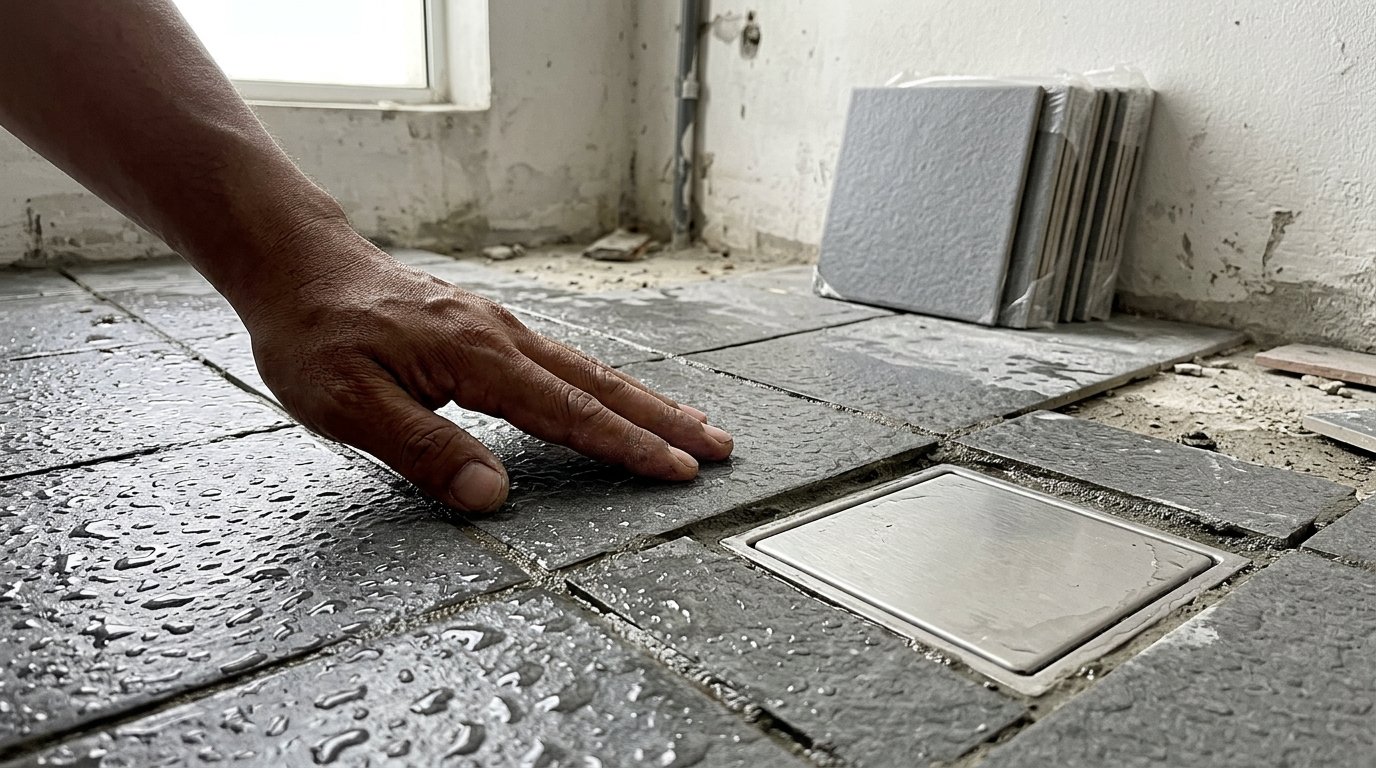
If you are retiling a bathroom, the safe choice is simple: a matt-finish homogeneous tile rated R10 or higher, in 30 × 30 cm or smaller for the wet zone, laid with a proper fall to the floor trap. Everything else — brand, colour, the word “anti-slip” on the box — matters far less than those three things. This guide is for when you are already renovating; if your current floor is the problem and retiling is not on the cards yet, mats and anti-slip treatments are the stop-gap, and that is a separate conversation.
Matt vs glossy, and the showroom trap
Tile showrooms are dry, air-conditioned and dusty, and almost any tile feels grippy under those conditions. The only test that means anything is wet: bring a small bottle of water, wet the display tile and rub it with your palm. A glossy glazed tile that felt fine dry turns to glass. We get called to “slippery new bathroom” jobs where the tile is six months old and beautiful — the owner chose it dry, under showroom lights.
Slip ratings, in plain language: the R-scale runs from R9 to R13. R9 is barely better than untested; R10 is the sensible minimum for a home bathroom; R11 grips noticeably better and is what we suggest inside the shower area or for households with elderly parents. Two honest warnings, though. First, “anti-slip” printed on a box is not a regulated claim in Malaysia — ask for the actual R rating, and if the shop cannot produce it, do the wet-palm test and trust your hand. Second, grip and cleaning effort are a trade-off: a heavily textured R12 tile holds soap scum in every dimple, and in the hard water around the Serdang belt it turns grey in the grout-and-texture valleys within a year. R11 in the shower zone, R10 everywhere else, is the balance that works in practice.
Small tiles grip better — and not because of the tile
A 30 × 30 tile has four times as many grout lines per square metre as a 60 × 60, and every grout line is a tread groove for a wet foot — grout is cement-rough even when the tile is smooth. Mosaic sheets take this further, which is why you see them in hotel showers. There is a second, less obvious reason we push smaller tiles in wet zones: the fall. A bathroom floor must slope towards the trap, and a large-format tile cannot bend. To slope big tiles properly the tiler must cut them into an envelope pattern of triangles — more cuts, more labour, and a corner-cutting tiler will simply lay them flatter instead. Small tiles follow a slope naturally. If you love the big-slab look, use it outside the shower screen and switch to mosaic or 30 × 30 inside.
Ceramic or homogeneous?
A glazed ceramic tile is a grip surface baked onto a softer body; a homogeneous (porcelain) tile is the same material all the way through. On a bathroom floor the difference shows at year ten, not year one: glaze at the doorway and in front of the WC wears and chips, exposing a slick pale body underneath. Homogeneous costs a little more per piece but is denser, wears evenly, and a chip barely shows. One caution from site: some budget renovations use glossy ceramic wall tiles on floors because they are cheap and match the walls — they are not rated for floor traffic, and they are the most slippery floor finish we ever stand on.
| Option | Wet grip | Cleaning effort | Verdict |
|---|---|---|---|
| Glossy glazed ceramic | Poor | Easy | Walls only — never on a bathroom floor |
| Matt ceramic, R10 | Good | Easy | Fine on a budget, expect glaze wear at high-traffic spots |
| Matt homogeneous, R10–R11 | Good–very good | Moderate | Our default recommendation for the whole floor |
| Mosaic / small-format in shower zone | Very good | More grout to scrub | Worth it inside the shower, especially for elderly households |
The mistake no tile can fix
Pooled water defeats every rating on this list — a puddle on an R11 tile is still a puddle. Retiling is the one chance to correct the fall to the trap, because it is set in the screed under the tiles, not the tiles themselves. If your current floor holds puddles, say so when you get quotes and make sure “re-screed to fall” is written in, not assumed. A floor retile with slope correction sits inside a typical bathroom refresh at RM 3,000–8,000 depending on size and tile choice — our price guide shows where the rest lands. And if the reason you are reading this is an ageing parent, tile choice is one piece of a bigger picture alongside grab bars and level entry — our elderly bathroom package covers the whole room in one job.
Facing this problem at your home or shop?
WhatsApp us a photo — honest answer within 1 working hour. Serving Serdang, Seri Kembangan, Kajang & Puchong.
WhatsApp 013-940 0355