Guides ·
Painting over old bathroom tiles: does epoxy tile paint actually last?
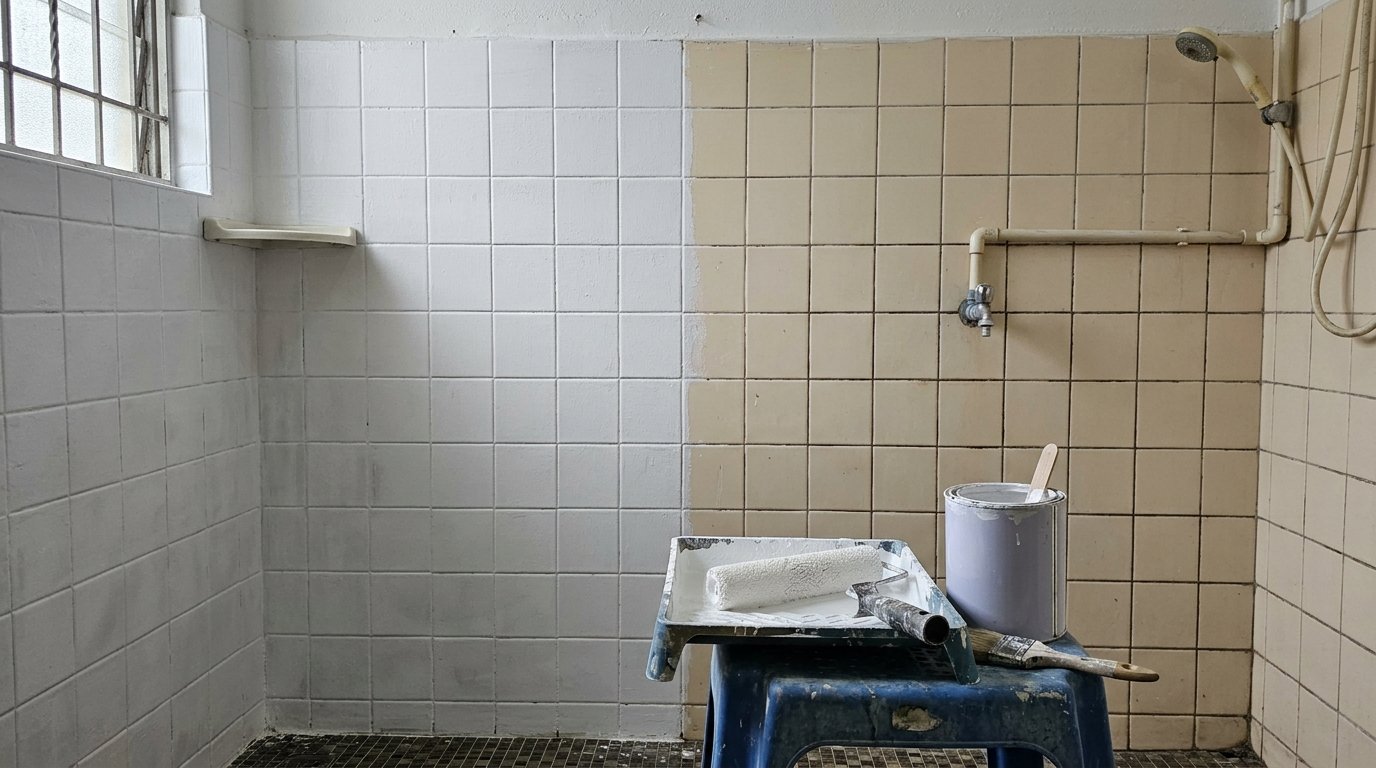
The honest answer first: epoxy tile paint on a dry bathroom wall can look respectable for three to five years. The same paint in the shower zone, or on a wet floor, starts peeling at the grout lines within one to two years — and the brand on the tin barely changes that. We have seen enough painted-over bathrooms around Seri Kembangan and Bangi to say it plainly: epoxy paint is a legitimate short-term facelift, not a substitute for retiling.
Why it always fails at the grout lines first
Paint bonds well to glazed tile once the glaze has been scuffed. Grout is a different material living in the same wall: cement grout is porous, and in a shower it stays damp from behind long after the surface looks dry. Moisture migrating out through the grout pushes the paint film off from underneath, so the first sign of failure is thin grey lines tracing the grout pattern — usually within months in a daily-use shower. Floors fail even faster, because foot traffic, standing water and dragged pails attack the film from above while the damp works from below.
Prep decides everything
Every peeling epoxy job we get called to look at skipped at least one of these steps. If you are doing it yourself, this list is the whole game:
- Degrease twice, then rinse. Years of soap scum are invisible on glazed tile. Paint over that film and the coating comes off in sheets, taking your weekend with it.
- Strip every bead and smear of old silicone first. Nothing bonds to silicone residue — not even epoxy. Even a finger-wipe of it left on the tile shows up later as a ghost line where the paint crawls away.
- Scuff-sand the glaze and vacuum the dust, then wipe down with a damp cloth and let it dry fully.
- Give it bone-dry days. The bathroom needs to be out of use for two to three days before painting and, ideally, five to seven after. In Malaysian humidity that means picking a dry week and running a fan — rushing the cure is the second most common cause of early peeling after bad degreasing.
- On floors, mix in anti-slip additive. Painted glaze with water on it is dangerously slick without it.
When painting is actually the smart move
For a rental unit between tenants, epoxy paint earns its keep. A 1980s brown-tile bathroom can go bright and clean-looking for RM 150–400 in materials plus a weekend — or one handyman day — and it only needs to look good for a tenancy or two before the next repaint. That maths works; it is exactly the kind of fast, honest turnaround job we cover in our landlord package. The same logic applies if you are staging a house for sale, or buying two years of patience before a renovation you have already planned.
| Option | Typical cost | Honest lifespan in a wet bathroom |
|---|---|---|
| Epoxy paint over tiles | RM 150–400 materials, DIY | 1–2 years in the shower zone, 3–5 on dry walls |
| Deep clean, regrout and new silicone | RM 200–600 as handyman work | Keeps sound tiles presentable for years |
| Bathroom refresh (retile, new fittings) | RM 3,000–8,000 | 10–15 years |
When it is the wrong call
If this is the home you plan to live in for the next decade, repainting the shower zone every year or two gets old fast, and each repaint needs the same full prep. And paint cannot fix what is wrong underneath: tap the tiles first, and if several sound hollow, they are debonding and will pop with or without paint on them — now with a painted surface that makes matching impossible. Worse, a coat of paint hides the early warning signs of failing waterproofing, like darkening grout and damp patches, until the problem announces itself through the ceiling below. Flat, solid, merely ugly tiles: paint away. Cracked, hollow or leaking: put the money toward the real fix — our price guide shows what the RM 3,000–8,000 refresh range actually covers.
Facing this problem at your home or shop?
WhatsApp us a photo — honest answer within 1 working hour. Serving Serdang, Seri Kembangan, Kajang & Puchong.
WhatsApp 013-940 0355