Guides ·
Rotting cabinet under the kitchen sink: stop the leak before replacing the wood
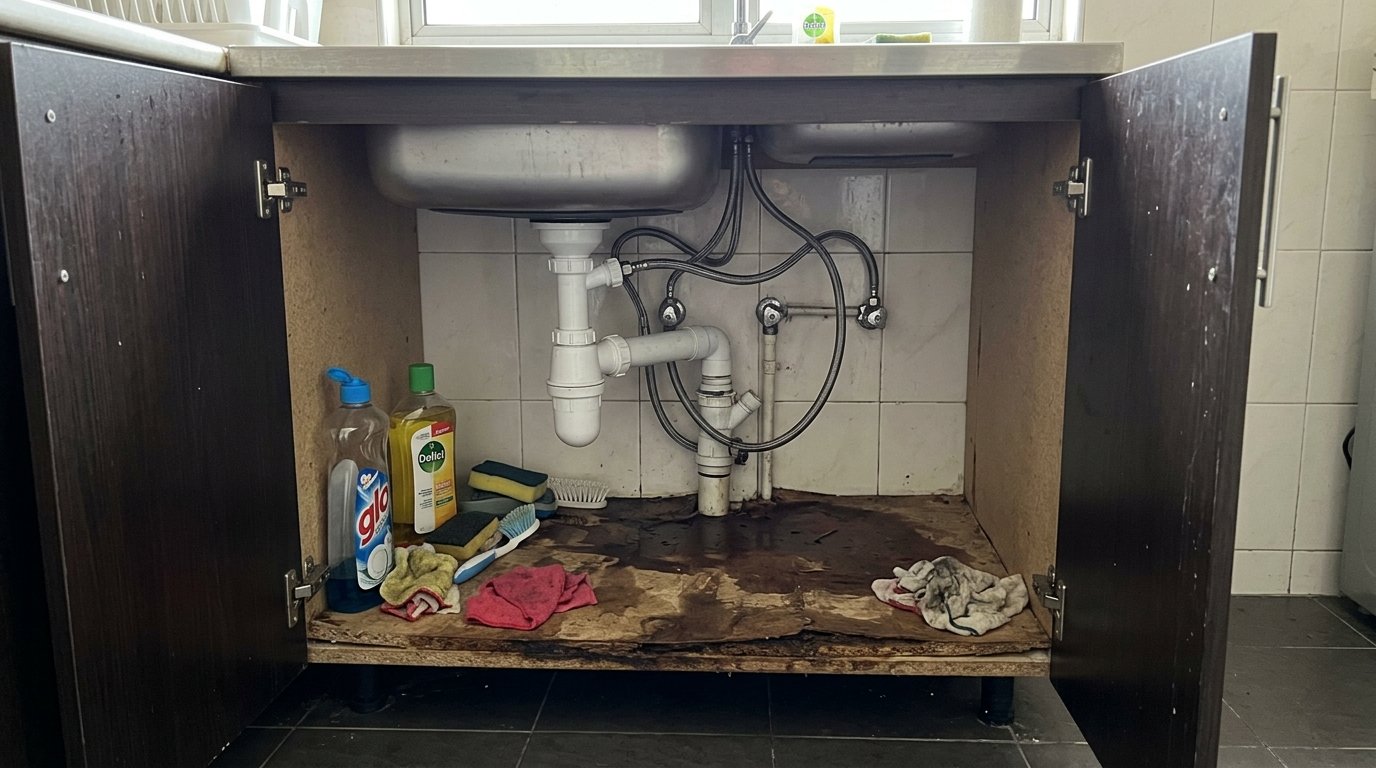
Quick answer: the wood under your sink is rotting because something above it has been dripping for months — almost always the bottle trap, a flexible hose, or the base of the tap. If you replace the cabinet base without fixing the drip, the new board rots too, usually within a year. So find the leak first, fix it (most fixes need nothing more than your hand), let everything stay dry for a week, and only then deal with the wood.
Why one tiny drip destroys a whole cabinet
Most kitchen cabinets in the terrace houses around Serdang, Seri Kembangan and Kajang are melamine-faced chipboard. Chipboard shrugs off splashes, but a drip that lands on the same spot every time the sink drains soaks in and swells the board like a biscuit dipped in tea. Once it swells, it never flattens back, and mould moves in. One drop a minute is enough — you will never hear it, but inside a closed, unventilated box it adds up to more than a litre a day with nowhere to evaporate.
Find the drip: the tissue test
Dry everything under the sink with a cloth, then wrap dry tissue paper around each joint:
- both nuts of the bottle trap (the plastic U- or bottle-shaped fitting under the plughole)
- each end of the flexible hoses feeding the tap
- the underside of the tap, where it passes through the counter
Now fill the sink right up and pull the plug. A full sink puts far more pressure on the trap joints than a running tap, which is why so many leaks only show up “sometimes”. Check the tissues straight away and again the next morning — the wet one points at your culprit.
One catch we see often: if a pipe is evenly damp along its whole length rather than wet at one point, that is condensation on a cold pipe, not a leak. It happens in humid weather, especially in air-conditioned kitchens, and needs no repair — just leave the cabinet doors open more often.
The three usual suspects
1. The bottle trap
Plastic trap nuts are designed to be tightened by hand — hand-tight plus a quarter turn, no more. A spanner will crack the nut or strip the fine plastic threads, and then it will never seal again. If tightening does not stop it, open the nut and check the rubber cone washer inside: it must sit with the taper facing the pipe, and it flattens out after years of service. A replacement washer costs a couple of ringgit.
2. Flexible hoses
Braided hoses almost always fail at the crimped metal collar, not the middle. Rust specks on the braid near the collar mean the hose is on its way out — replace it, never tape it, because these run at mains pressure and a burst hose floods a kitchen in minutes. The part is RM 15–30 at any hardware shop.
3. The tap base
If the cabinet is wet at the back near the tap, water is running down the tap body and through the counter hole — a worn O-ring or a loose mounting nut. This one drips only when the tap is used, which is why the tissue test after normal use catches it.
When tightening is not enough
- the trap body has a hairline crack (feels like a wet line that keeps coming back)
- washers are perished flat and the joint weeps no matter what
- the hose braid is rusty or bulging
- the tap itself wobbles or drips from the spout
That is a straightforward plumbing visit — typically RM 100–500 depending on parts, in line with our price guide.
Fix the wood only after a dry week
Once the drip is gone, give it a full week and check the tissue stays dry. In most cabinets the base is a separate panel that can be swapped without rebuilding the carcass — and it is worth paying a little more for exterior-grade plywood or a PVC foam board instead of another piece of chipboard, so the next drip does not write off the cabinet again.
Make the visit worth it
A trap swap alone is a small job. If you are calling someone out, walk the house first: resealing the sink rim, a dripping bathroom tap, loose hinges — bundling them into one handyman visit costs far less than three separate call-outs.
Facing this problem at your home or shop?
WhatsApp us a photo — honest answer within 1 working hour. Serving Serdang, Seri Kembangan, Kajang & Puchong.
WhatsApp 013-940 0355