Guides ·
Brown water and weak flow in an old house: rusting GI pipes and when to repipe
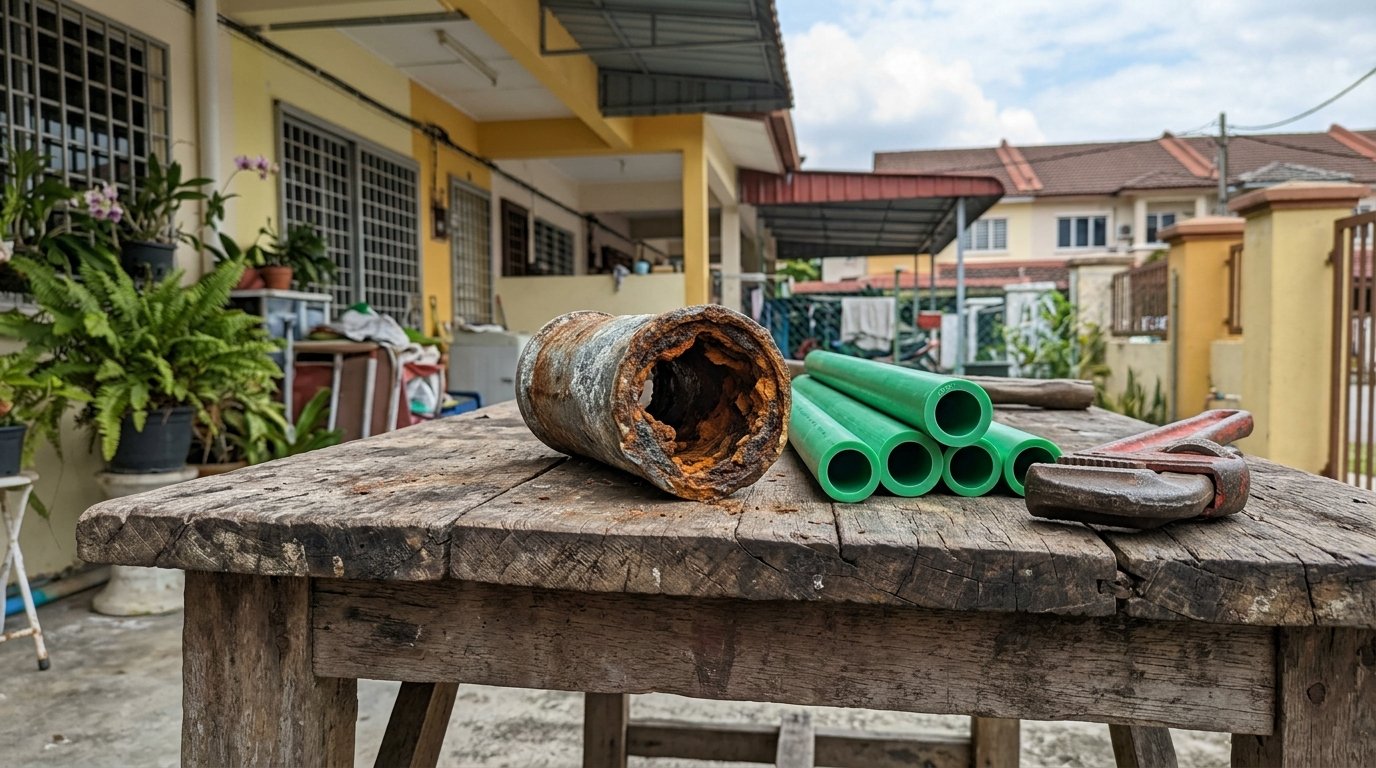
Straight answer: if the first water out of the tap each morning runs brown or yellowish and clears after a minute of running, the rust is coming from inside your own pipes — almost always the original galvanised iron (GI) pipework — not from the mains supply. Houses built before roughly 2000 around Serdang, Seri Kembangan, Balakong and Kajang mostly still carry their original GI pipes, and after 25–30 years they are rusting shut from the inside. What the honest fix looks like depends on how far gone they are, so do the five-minute test below before anyone quotes you anything.
Your pipes or your tank? The glass test
Brown water has two common sources: rusting pipework, or sediment stirred up in the rooftop storage tank. Run the first water of the morning into a clear glass and look closely:
- GI rust: an orange-brown tint with tiny hard flakes, worst on the very first draw, clearing as you run the tap. Often worse at the taps furthest from the tank, because the water has sat in more pipe overnight.
- Tank sediment: fine brown silt that settles evenly at the bottom of the glass, shows up at every tap even after running a while, and typically gets worse right after a supply disruption refills and stirs the tank.
If it looks like sediment, get the tank washed first — that is a far cheaper job, and we would rather tell you that than sell you a repipe you do not need. If you are seeing flakes, read on.
Why GI pipes fail from the inside
GI pipe is steel with a thin zinc coating, and the zinc is sacrificial: it corrodes slowly so the steel underneath does not. After two to three decades in our climate the zinc is used up, and the steel starts rusting. Rust takes up more space than the steel it came from, so the bore chokes narrower year after year — which is why the flow at your shower keeps getting weaker even though nothing is “broken”. A pipe that started at 15 mm inside can be down to a pencil-width channel.
Here is a detail from the tools side: the first leaks almost never appear mid-pipe. They appear at the threaded joints, because when the original installer cut threads into the pipe, the cutting removed the zinc right there. Those joints have been rusting unprotected since day one — which is why pinhole leaks turn up at elbows and sockets buried inside walls, announcing themselves as a damp patch or a water bill that creeps up.
Why patching buys months, not years
Replacing one leaking section is a legitimate RM 100–500 plumbing job, and sometimes it is exactly the right call. But be clear-eyed about what it buys. Unscrewing a corroded fitting often crumbles the neighbouring thread, and once the new section restores full flow, the pressure simply finds the next-weakest joint in the run. When a customer calls us for the second pinhole in the same line within a year, we say it plainly: the patching phase is over, and it is time to plan a repipe rather than fund it one emergency at a time.
Repiping without hacking your tiles
The word “repipe” scares people because they picture walls being broken open. A modern repipe mostly avoids that: new PPR or poly pipe is run externally — clipped along the wall surface and boxed in where it matters visually — dropping to each tap point, while the old GI is capped off and abandoned inside the wall. No tile hacking, no re-waterproofing triggered. For a typical single-storey terrace this is one to two days of work, and the water is usually back on the same evening; a double-storey with more bathrooms takes longer.
Symptom checklist
| Symptom | Most likely cause | Honest fix |
|---|---|---|
| Brown first-draw water, clears after running | Rust inside GI pipes | Plan a repipe; patch leaks meanwhile |
| Brown water at all taps, settles as fine silt | Dirty rooftop tank | Tank wash — check before blaming pipes |
| Flow weaker every year, worst upstairs | Bore choked by rust | Repipe — a booster pump cannot push through a blocked pipe |
| Damp wall patch or creeping water bill | Pinhole at a buried joint | Repair now (RM 100–500); treat as a repipe warning |
What it costs
A single section repair or joint replacement sits in the normal plumbing range of RM 100–500. A full repipe is quoted per house after a walk-through, because the price depends on the number of tap points, storeys and how much boxing-in you want — for a standard terrace it typically runs into the low thousands. Any proper quote should itemise the pipe grade (PPR or poly), the number of points, and what happens to the old line. Our price guide shows where repair work sits, and you can reach us through the plumbing service page for a look at your pipes before anything is decided.
Facing this problem at your home or shop?
WhatsApp us a photo — honest answer within 1 working hour. Serving Serdang, Seri Kembangan, Kajang & Puchong.
WhatsApp 013-940 0355