Guides ·
Heavy or sticking sliding doors: worn rollers, dirty tracks, and when to replace
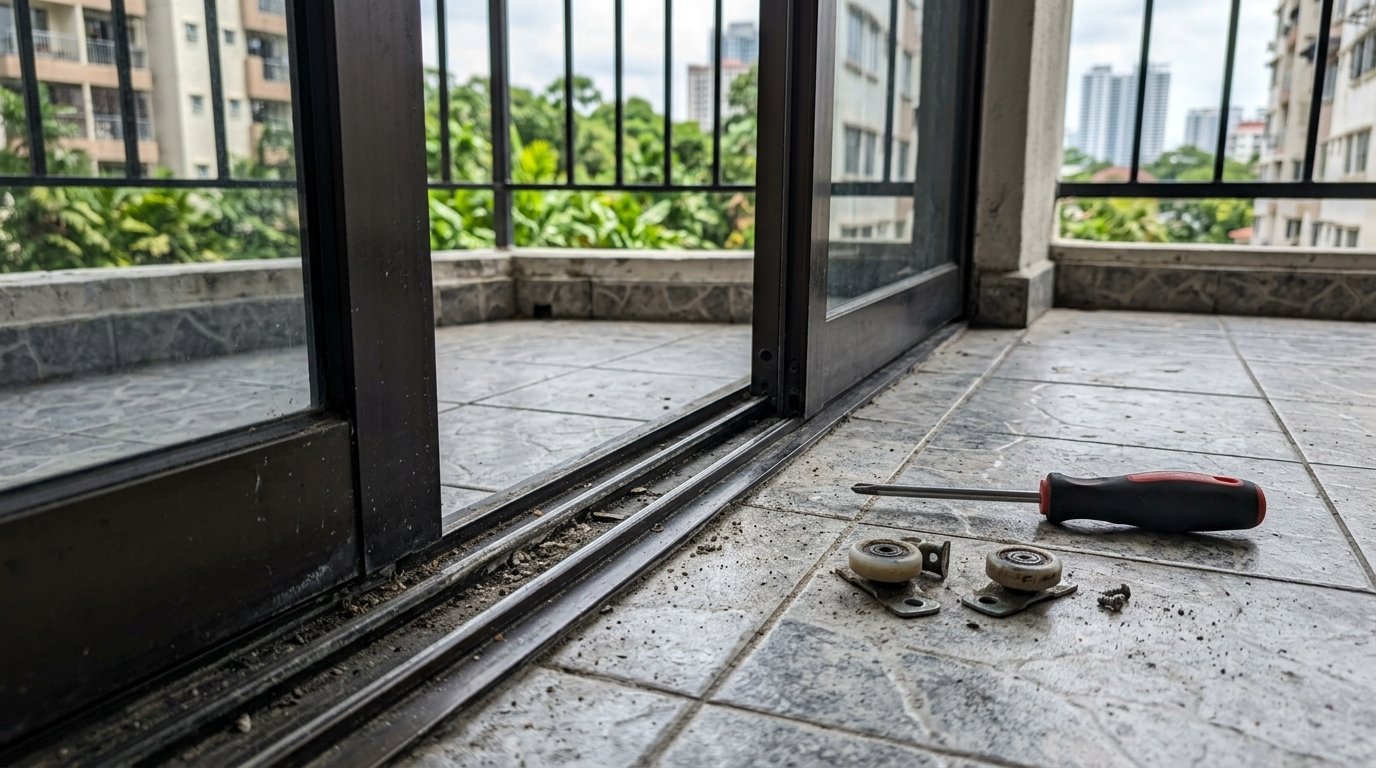
Straight answer: a sliding door that suddenly needs a shoulder behind it is almost never a “worn-out door”. In nine cases out of ten it is grit packed into the bottom track, flat-spotted nylon rollers, or both. Cleaning and adjusting costs you nothing, a set of replacement rollers is RM 20–50 in parts, and only a genuinely worn-through track justifies spending more.
Aluminium sliding doors are everywhere around here — balcony doors in Seri Kembangan and Puchong apartments, kitchen-extension doors in Serdang and Kajang terraces — and they all fail the same way, in the same order. Work through that order and you fix the cheap thing first.
Step one: clean the track properly (most doors end here)
The bottom track is a dirt magnet. Balcony doors collect rain-splashed grit and dried moss; kitchen doors collect cooking film that glues dust into a sticky paste. Vacuum the channel, run an old toothbrush along the inner corners of the rail, wipe it out, then finish with a silicone spray — not cooking oil and not thick grease, both of which trap new dirt and make the door worse within a month.
While you are down there, read the rail itself. A healthy rail has an even, dull finish. A bright, polished silver line along the top means the rollers stopped rolling long ago and the door has been sliding metal-on-metal — that shine is the single most reliable sign the rollers underneath are flat.
Step two: the adjustment screws nobody notices
At each bottom corner of the panel, usually hidden behind a small hole or plastic plug in the edge, sits a roller height screw: clockwise lifts that corner, anticlockwise drops it. If one corner drags or the door rubs the frame at the top, raise the low corner half a turn at a time and test. This same screw fixes a security latch that has stopped catching — a sagged door throws the latch out of line with its keeper, and the cure is levelling the door, not bending the keeper plate with pliers.
Step three: swapping flat-spotted rollers (RM 20–50)
Nylon rollers develop flat spots when a door is dragged over a gritty track, and once flat they never roll again. To swap them, slide the panel to the middle, lift it straight up into the deeper top channel, and swing the bottom out towards you. Get a second person: a glass balcony door weighs 30–50 kg and the top channel only gives you a couple of centimetres of lift — this is not a job to do alone on a tiled floor. Unscrew the old roller unit from the bottom edge and take it to the hardware shop to match; there are dozens of profiles, and both the wheel diameter and the bracket shape must match or the door will sit at the wrong height.
When the track itself is finished
If the rollers are new, the track is clean, and the door still grinds, look at that rail once more. A visible groove worn into the top of it means new rollers will flat-spot again within months — the wheel is riding a ridge with a sharp edge. The honest options, in rising order of cost: a stainless-steel cap rail that clips over the worn rail, a full track replacement, or — only if the frame itself is corroded or bent — a new door set. All of these are handyman jobs quoted by length and access, not a renovation.
| Fix | Who does it | Parts cost |
|---|---|---|
| Vacuum, brush and silicone-spray the track | DIY | Under RM 20 |
| Adjust roller height screws, re-align latch | DIY | Free |
| Replace flat-spotted rollers | DIY with a helper, or handyman | RM 20–50 |
| Cap rail or new track | Handyman | Quoted by length |
Worth bundling with other small jobs
A roller swap on its own is a small call-out, which is why we normally bundle it with the rest of the house’s odd jobs — a dripping tap, a loose hinge, a stiff window — in one visit. See our services and price guide for the honest ranges before you call anyone.
Facing this problem at your home or shop?
WhatsApp us a photo — honest answer within 1 working hour. Serving Serdang, Seri Kembangan, Kajang & Puchong.
WhatsApp 013-940 0355