Guides ·
Loose stair handrail: a small fix that prevents a serious fall
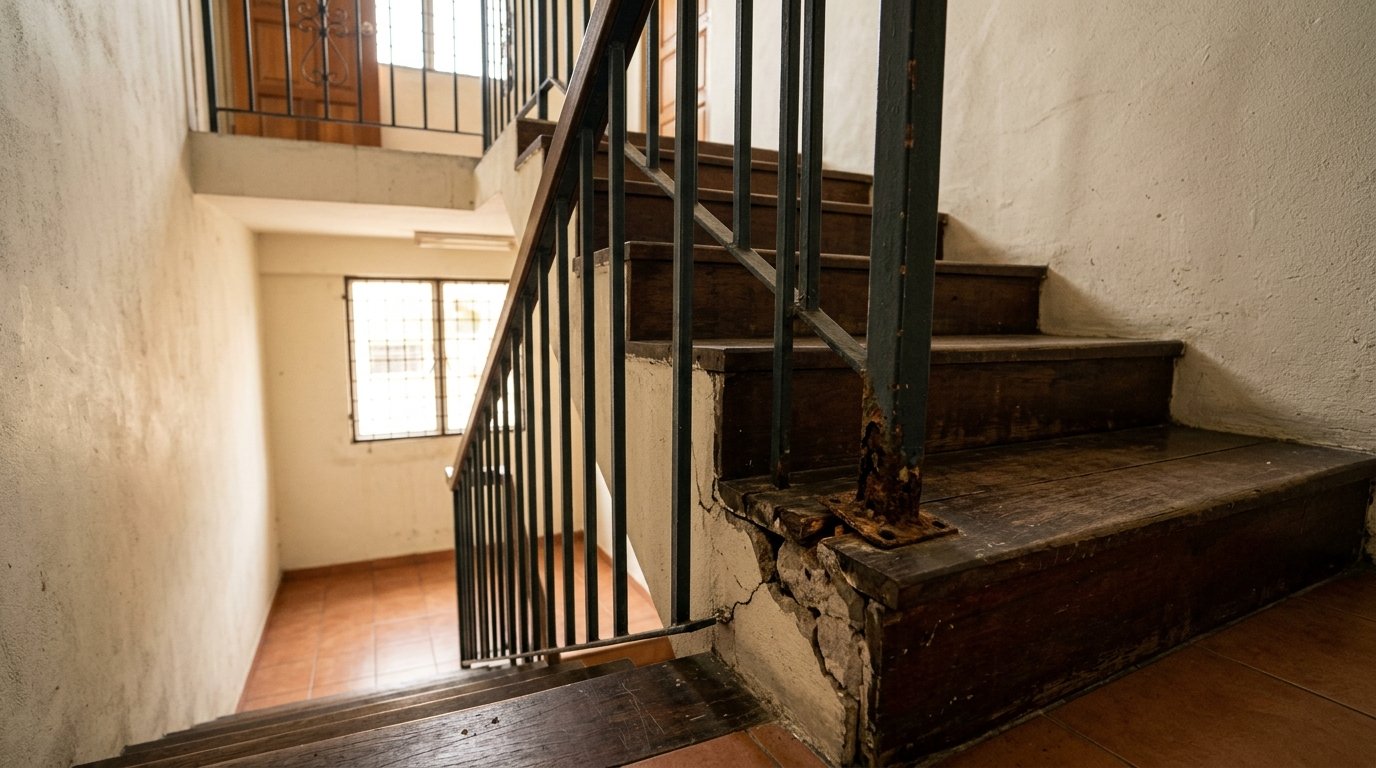
Straight answer: a handrail that moves when you grip it should be fixed this week, not someday — and the fix is almost never “tighten the screws”. A wobbly rail means the fixings have lost their bite in the wall or floor, and turning the same screws in the same holes only makes the holes bigger. The proper repair is re-anchoring into solid brick or concrete, which for most terrace house staircases is a straightforward handyman visit in the low hundreds of ringgit.
Here is the uncomfortable part: a loose rail is genuinely worse than no rail. Nobody leans on a staircase wall expecting it to hold them, but everyone commits their full weight to a handrail without thinking — that is the entire point of it. The moment it shifts under load is the moment someone is already off balance, halfway down the stairs. In houses around Serdang, Seri Kembangan and Kajang where elderly parents have moved in, this is one of the first things we check, and it fails the shake test surprisingly often.
Why handrails come loose
- The fixings never reached the brick. This is the big one. Terrace house walls are brick with 15–25mm of cement render on top. If the original installer used short screws and plugs, they are gripping render only — and render crumbles around a plug that gets rocked a few thousand times. The tell is in the drill dust: grey-white dust means you are still in render; red dust means you have finally reached brick.
- Rusted baluster bases. Mild steel railings rust first at the floor, where mopping water sits against the base plate. The post looks fine at eye level while the metal at the weld is flaking apart.
- The newel post at the bottom step. On timber railings, the big post at the bottom takes the swing-around load every single day. Its bolts loosen inside the timber, and tightening helps for a month before it is loose again.
- A plug spinning in its hole. If you turn the screw and it never firms up, the plug itself is rotating. More turning achieves nothing.
The proper fix, not the quick one
Re-anchoring means new fixing points done right: drilling past the render into brick or concrete, longer screws with the correct plugs, and — in older walls where the brick or mortar joints have gone soft — chemical anchor (epoxy injected into the hole before the stud goes in), which grips crumbly material far better than any plastic plug. Where a bracket has torn out an oversized hole, a backing plate spreads the load across a wider patch of wall instead of asking one hole to do all the work. Rusted steel bases need the rust ground back and the base re-welded or re-bolted — paint over flaking rust is decoration, not repair.
Worth doing at the same time: a second rail for warga emas
Most Malaysian staircases have one railing on the open side and a bare wall on the other. For an elderly person, the wall side is exactly where a second rail earns its keep — coming downstairs, many older folk want both hands working. The details matter more than the product:
- Height: 850–900mm above the step nosing, consistent all the way.
- Grip: a round profile around 32–40mm, so fingers close fully around it. Flat decorative rails cannot be gripped, only touched.
- Run-off: the rail should extend past the top and bottom step, because the first and last steps are where falls actually happen.
- Clearance: about 40–50mm off the wall so knuckles never scrape.
We fit wall rails as part of the same visit as grab bars and other ageing-in-place work — see the full scope in our elderly bathroom and safety package.
What it costs
| Job | Typical scope | Rough cost |
|---|---|---|
| Re-anchor existing railing | 2–6 fixing points redone into brick/concrete | Low hundreds RM |
| Re-weld rusted baluster bases | Grind, weld, prime and paint | Low hundreds RM |
| Add a wall-side second rail | Supply and fit, full staircase | Mid hundreds RM, length-dependent |
One honest note: if your railing is solid when you shake it hard at every post, leave it alone — there is nothing to sell you here. But do the shake test today, especially if someone in the house is past seventy. It takes ten seconds, and it is the cheapest fall-prevention check that exists. If something moves, it bundles well with other small jobs in one handyman visit.
Facing this problem at your home or shop?
WhatsApp us a photo — honest answer within 1 working hour. Serving Serdang, Seri Kembangan, Kajang & Puchong.
WhatsApp 013-940 0355