Guides ·
Clogged sink: what you can DIY and when to call someone
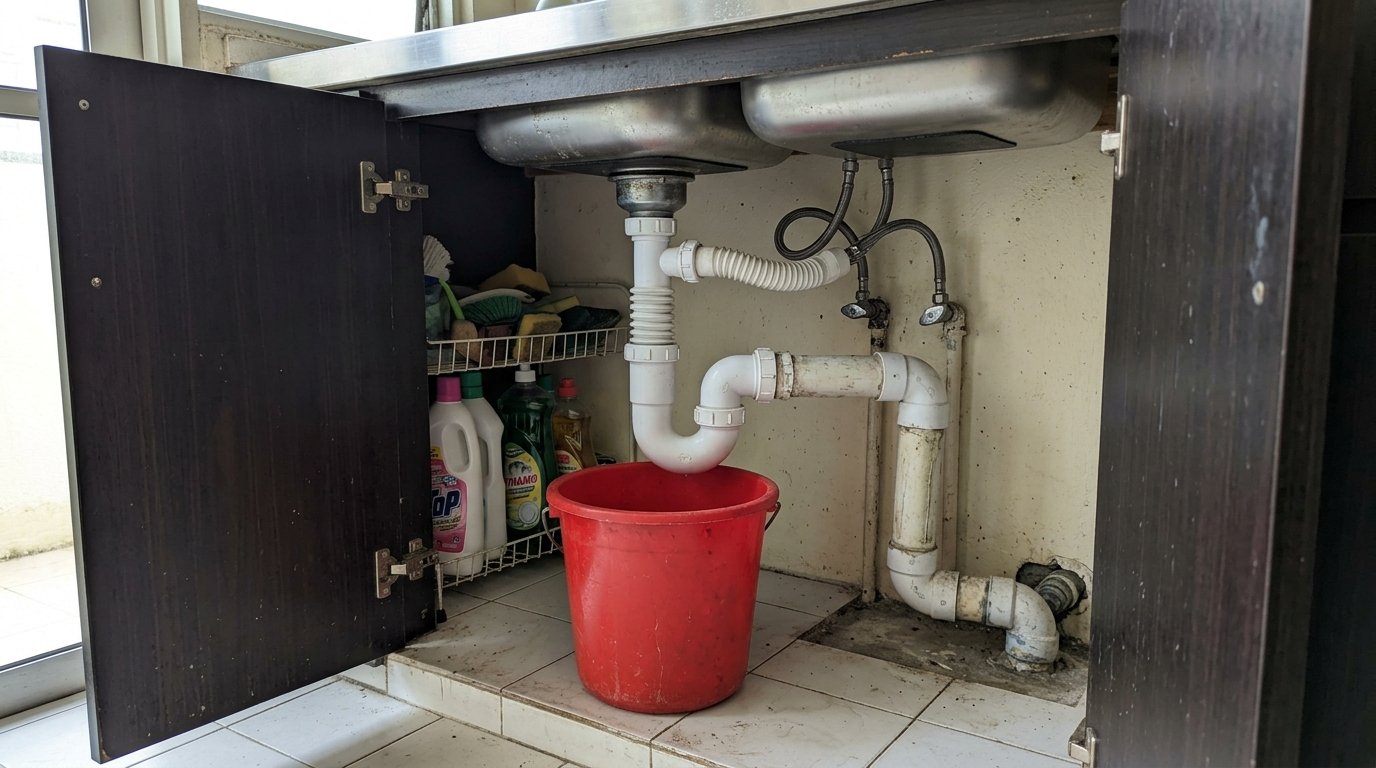
Good news first: most blocked sinks are a 20-minute DIY job that costs nothing. From our own call-outs around Serdang, Seri Kembangan and Balakong, a good half of the sink calls we get could have been settled at home with a plunger and a bucket — and we'd rather tell you that upfront than charge you for it. Here's the order to try things in, and the specific signs that mean this one genuinely needs a professional.
Try these first, in this order
- Hot water and dish soap (kitchen sinks). A kettle of hot — not boiling — water with a squirt of dish soap softens fresh grease. Boiling water is a bad idea: most traps here are PVC, and repeated boiling water warps the trap and loosens the glued joints.
- Plunger, done properly. Use a small cup plunger, keep a few centimetres of water in the sink so the cup seals, and block the overflow hole with a wet cloth — otherwise every push just blows air out of the overflow instead of moving the blockage. A dozen sharp pumps, then check.
- Open the bottle trap. The white plastic bottle under the sink unscrews by hand — no tools needed on most local setups. Put a bucket underneath, open it, and clear out the sludge. Nine out of ten bathroom-sink blockages are sitting right there: a grey wad of hair and soap scum.
- A zip strip for hair. The RM 5 barbed plastic strip from the hardware shop pulls hair clumps out through the outlet without opening anything.
Why we'd skip chemical drain openers
Tempting, but here's the plumber's-eye view: if the caustic soda doesn't clear the blockage, it just sits there — and the next person to open that trap (maybe you, maybe us) gets a handful of caustic water. Repeated use also hardens grease into a stiff soap-like plug that's worse than the original blockage, and it ages the rubber seals in the trap. Enzyme cleaners are fine as monthly maintenance, but they're too slow to fix an actual blockage.
Kitchen sinks are a different animal
Bathroom sink blockages live at the trap and clear easily. Kitchen blockages are usually grease — and grease doesn't stop at the trap. In a lot of terrace houses here the kitchen has been extended, which means the waste pipe makes a long, fairly flat run before it exits to the outdoor drain. Cooking oil goes down as liquid, cools, and solidifies along that run — typically right where the pipe passes through the wall, well beyond anything a plunger can reach. That's why a kitchen sink that blocks again every few weeks isn't a washing-up problem; it's a pipe-gradient and grease-buildup problem.
When to call someone
| What you notice | What it usually means |
|---|---|
| Water rises in the floor trap when the sink drains | The blockage is downstream in the main line, not in your sink |
| Other drains gurgle when this one empties | A shared line or venting problem — beyond the trap |
| Trap is clean but the sink still drains slowly | Blockage inside the wall or floor run |
| Blocks again within weeks of clearing | Grease buildup or a poorly graded pipe that needs proper clearing |
| Shoplot where several units back up together | Shared stack — get it checked before it becomes the whole block's problem |
For jobs like these we come with a drain snake and clearing tools, and typical plumbing work runs RM 100 – 500 depending on access and how far in the blockage sits. The full range is on our price guide, and plumbing is one of our everyday call-outs across the Serdang belt.
The two-ringgit prevention
A simple mesh strainer on the kitchen sink and a hair catcher in the bathroom prevent most of this, and wiping oily pans with a paper towel before washing does more than any chemical ever will. Pour used cooking oil into an old can, not down the sink — your pipes (and the drain outside) will thank you.
Facing this problem at your home or shop?
WhatsApp us a photo — honest answer within 1 working hour. Serving Serdang, Seri Kembangan, Kajang & Puchong.
WhatsApp 013-940 0355