Guides ·
Cistern 'sweating' and a floor that is always wet: condensation or a real leak?
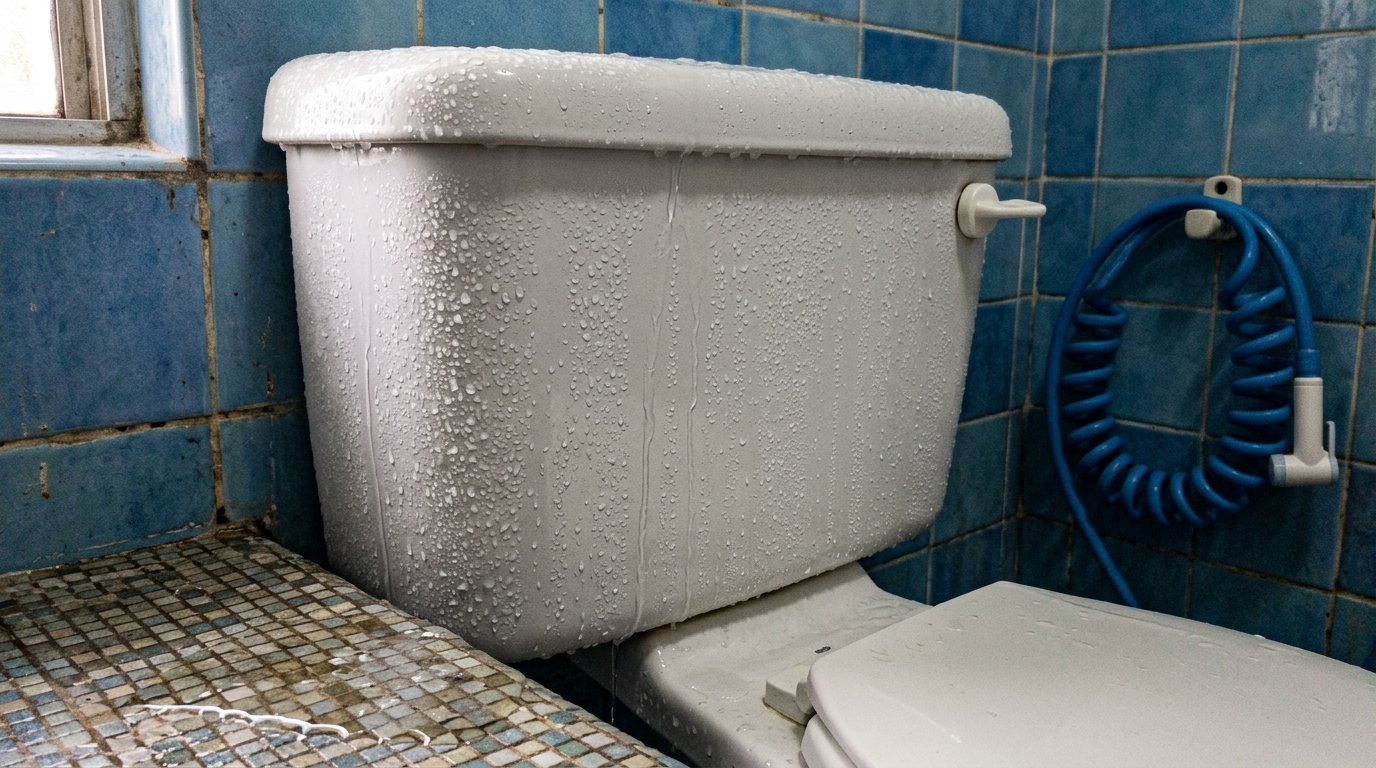
Straight answer: if the whole cistern is covered in an even film of fine droplets and the puddle sits directly underneath the tank, you are most likely looking at condensation, not a leak. The water inside the cistern and pipes is cooler than the humid air in the bathroom, so moisture from the air condenses on the cold ceramic — exactly like the outside of an iced drink at a mamak. A real leak behaves differently, and a two-minute test with a roll of tissue tells you which one you have before you pay anyone to hunt for a leak that does not exist.
This mix-up is one of the most common calls we get around Serdang, Seri Kembangan and Kajang during the rainy months, and it matters: a genuine cistern leak is a normal RM 100–500 plumbing job, while condensation is usually fixable for the price of a window left open and some pipe lagging.
The two-minute tissue test
Dry the entire cistern, the inlet pipe and the connections with tissue until everything is bone dry. Then watch for ten to fifteen minutes. If moisture returns as a uniform mist of tiny droplets across the whole ceramic surface, that is condensation — air does not pick favourites. If instead a bead forms at one specific point — a tank bolt under the cistern, the inlet nut, the seal between tank and bowl — and runs downward in a repeating track, that is a leak. Hold a dry piece of tissue against each suspect joint: the first spot that wets the tissue is your culprit.
For a damp patch on the floor or wall, the cling-film version works the same way: dry the patch, tape a piece of cling film flat over it, and check the next day. Droplets on top of the film mean moisture is coming from the room air — condensation. Moisture trapped under the film means water is arriving from behind or below, and that is a leak worth chasing.
While you are at it, drop a little food colouring into the cistern and wait twenty minutes without flushing. Colour appearing in the bowl means the flush valve is passing water silently — a separate, cheap fix, but one that quietly inflates the water bill.
Why it gets worse in rainy season
Condensation needs two things: cold water and humid air, and the monsoon months supply both at once. The mains water arrives cooler, the bathroom air hovers near saturation, and an enclosed toilet with no window — typical of apartment master bathrooms and many terrace-house additions in the Serdang belt — has nowhere to send that moisture. That is why the “leak” that appears every November and vanishes in the dry months is almost never a leak.
If it is condensation: cheap fixes that work
- Ventilation first. Leave the window open after showers, or run the exhaust fan for 15–20 minutes after use. Less humid air means less water to condense.
- Lag the inlet pipe. Foam pipe insulation from any hardware shop, a few ringgit per length, stops the coldest surface in the room from streaming.
- A drip tray under the cistern is an honest stopgap for a tank that only sweats a few weeks a year.
- Wipe-down discipline. A floor that stays wet for weeks grows mould in the grout lines regardless of the source.
If it is a leak: what usually fails
Three parts cause most cistern leaks: the tank bolts and their rubber washers (they corrode and the rubber flattens), the doughnut washer sealing the tank to the bowl, and the inlet valve nut working loose from years of refill vibration. All sit in the RM 100–500 plumbing band, parts included, and none of them justifies replacing the whole toilet. One warning from experience: do not let anyone “snug up” tank bolts hard on an old cistern — over-tightening cracks the ceramic, and then a RM 20 washer job becomes a new cistern.
Condensation vs leak at a glance
| Condensation | Real leak | |
|---|---|---|
| Pattern | Even mist over the whole tank | Bead at one joint, running in a track |
| Timing | Worse in rainy season, after showers | Constant, any weather |
| Puddle | Directly under the tank body | Traces back to one fitting |
| Tissue test | Whole surface re-mists evenly | One spot wets the tissue first |
| Fix | Ventilation, pipe lagging — mostly DIY | Washers, seals, valve — RM 100–500 |
One caution about floors that never dry
Whatever the source, a bathroom floor that stays wet for months is hard on the floor itself. Standing water works into grout lines and, on an older floor, starts probing the waterproofing layer — and failed waterproofing is a far bigger job than any cistern repair, as our re-waterproofing page explains. So it is worth settling the condensation-or-leak question properly rather than mopping around it for another year. If the tissue test points to a leak, or you would simply rather have it confirmed, our plumbing service covers exactly this kind of visit.
Facing this problem at your home or shop?
WhatsApp us a photo — honest answer within 1 working hour. Serving Serdang, Seri Kembangan, Kajang & Puchong.
WhatsApp 013-940 0355