Guides ·
Drilling bathroom wall tiles without cracking them: holder, mirror, grab bar
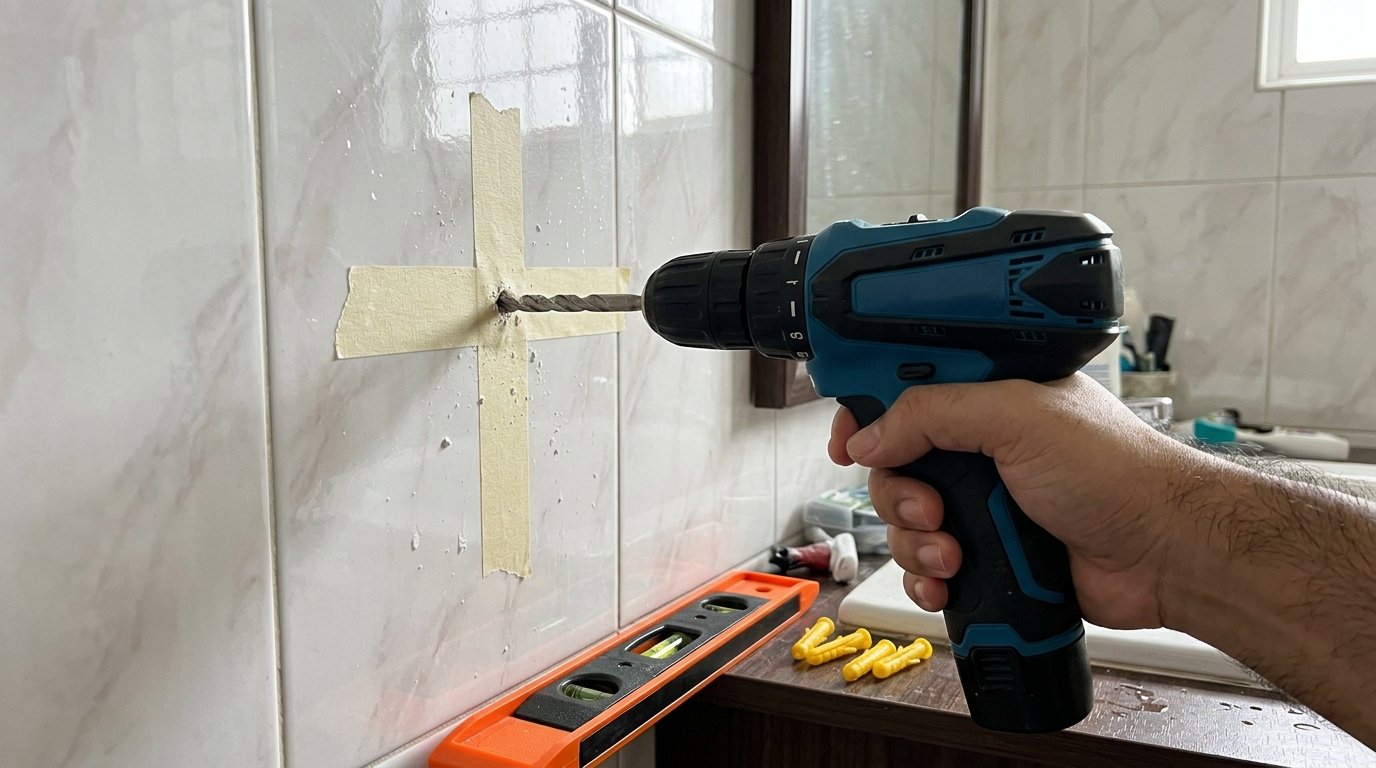
Tiles crack for three reasons, and all three are avoidable: the drill was left in hammer mode, the bit was a blunt masonry bit that skated across the glaze and chipped it, or the hole went into a spot where the tile has a hollow void behind it. Get those three right — hammer off, a proper tile bit, a solid spot — and drilling a glazed wall tile is a calm two-minute job, not a gamble with your tiling.
The technique that works
- Stick a cross of masking tape over the spot and mark the hole on the tape. The tape stops the bit wandering on the slippery glaze — wandering is what chips it.
- Use a carbide spear-point tile bit, not a regular masonry bit. They cost RM 10–20 and the sharp point bites instead of skating.
- Hammer function OFF. This is the number one tile killer — percussion shatters glaze instantly.
- Slowest speed, light pressure, let the bit cut. A spray of water now and then keeps the tip cool.
- You will feel the resistance change when the bit passes through the tile into the brick. Only then may you switch to a masonry bit with hammer on for the rest of the depth — wrap tape around the bit as a depth mark so you stop where the plug ends.
Keep the hole at least 2–3 cm from any tile edge — edges are where cracks start. Grout lines look like the safe option but they crumble, leave the plug sloppy, and look worse than a clean hole in the tile body.
Before you drill: know what is behind that wall
This is the part DIY guides skip and tilers never do. Wiring runs in vertical drops directly above and below every switch, socket and water-heater isolator; water pipes rise vertically from every tap, mixer and cistern inlet. So picture a vertical band about a palm wide above and below each fitting on that wall — and do not drill anywhere in it. In the older terrace houses around Serdang and Seri Kembangan the conduits sit shallow, sometimes barely 2 cm behind the tile, so this rule is not paranoia.
Then do the knock test: tap the exact spot with a knuckle or a coin. A solid thud means the tile is fully bedded; a hollow click means there is an adhesive void behind it, and a tile over a void flexes under the drill and cracks. Shift a few centimetres until the knock sounds solid.
Porcelain and homogeneous tiles: bring a diamond bit
If your bathroom was renovated in the last ten years, the walls may be homogeneous or porcelain tile — much harder than old ceramic. A carbide spear bit just polishes a shiny dimple into it. You need a small diamond-tipped bit, kept wet while cutting, started at a slight angle (or through a drilled guide block) so it does not skid. They are RM 20–40 each and worth every sen; forcing a carbide bit into homogeneous tile is how whole tiles end up cracked corner to corner.
Anchors that actually hold
| What you are mounting | What it needs |
|---|---|
| Hook, toothbrush holder, small shelf | Standard nylon wall plug, 6 mm screw — fine almost anywhere solid |
| Mirror, towel rail, bidet spray hook | Nylon plugs seated past the tile into the brick, not just in the tile layer |
| Mirror cabinet | Longer screws into brick; check the knock test across the whole footprint |
| Grab bar | Heavy-duty or chemical anchors into solid brick — never tile-only, never a hollow partition wall |
One trade note on the local hollow clay bricks used in many older houses here: a standard plug can spin uselessly in the void inside the brick. Use longer universal anchors that knot behind the hole, and if a plug spins, move up a size rather than filling the hole with toothpicks and hope.
A grab bar deserves the extra caution: it will one day take a falling adult's full weight sideways. If you are fitting one for elderly parents, placement height and solid anchoring matter as much as the bar itself — our elderly bathroom safety page covers the package we do, including bars anchored properly into structure.
When to just batch it to a handyman
One hole for a hook is a DIY job. A mirror, two towel rails, a shower shelf and a grab bar across two bathrooms is a half-day with three different bits — and one cracked tile wipes out everything you saved. Bundling the lot into a single handyman visit usually costs less than people expect, and the risk sits with us instead; see our services if that sounds like your Saturday rescued.
Facing this problem at your home or shop?
WhatsApp us a photo — honest answer within 1 working hour. Serving Serdang, Seri Kembangan, Kajang & Puchong.
WhatsApp 013-940 0355