Guides ·
Sticky locks and loose door handles: cheap fixes before they fail
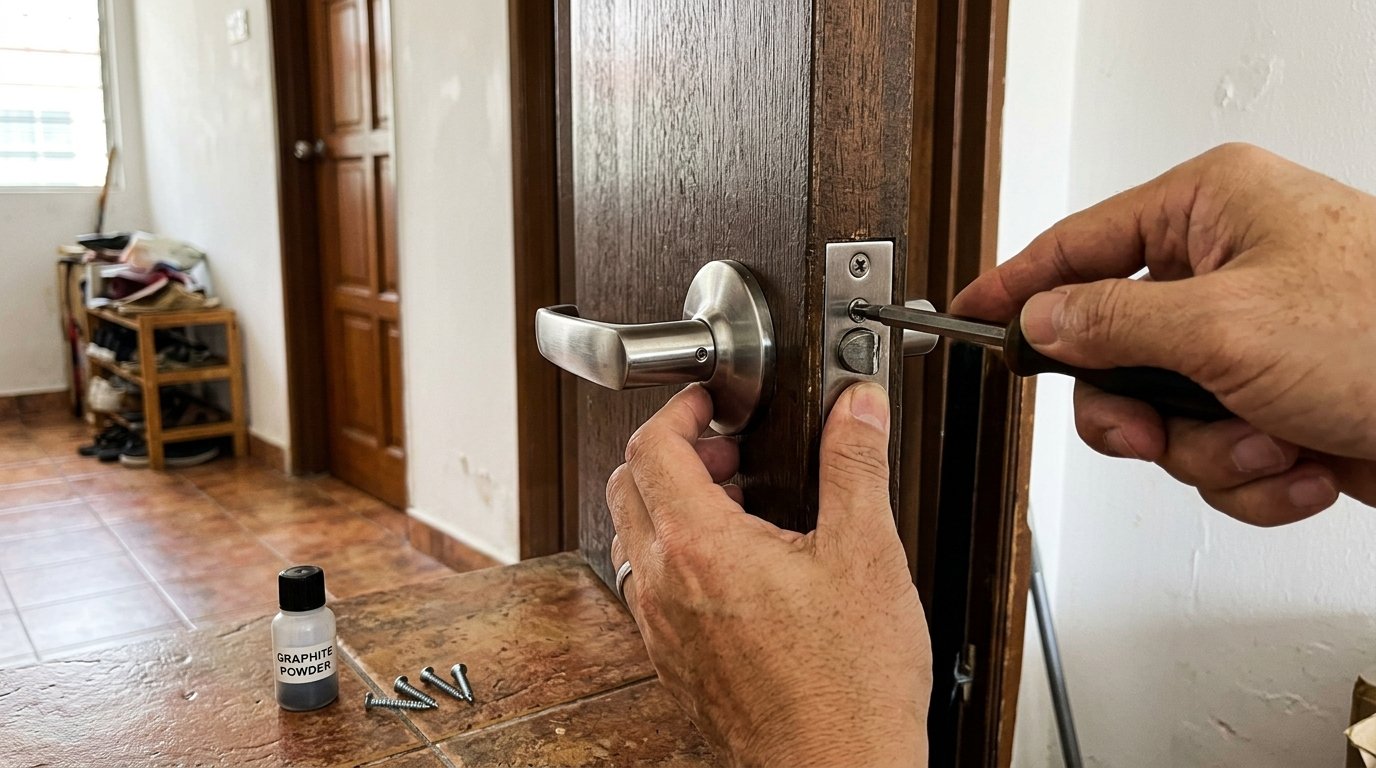
Nine times out of ten, a “spoilt” door lock is nothing of the sort. Either the cylinder is dry and needs graphite — not oil — or the door has sagged a few millimetres so the latch no longer lines up with the strike plate on the frame. Both fixes cost between nothing and RM 20 and take under an hour, and they are worth doing early: a lock you have to slam or jiggle every day is a lock that will one day refuse to open at all, usually when you are standing outside with the groceries.
Sticky key? Use graphite, never oil
The instinct is to spray WD-40 or drip oil into the keyhole, and it does work — for a couple of weeks. Then the oil inside the pin cylinder collects dust and brass filings, and the paste it forms slowly gums up the pins until the lock is stickier than before. This is the single most common thing we find when a customer says a lock “was serviced already but spoilt again”. Locksmiths use dry lubricant for a reason: powdered graphite (a small puffer bottle costs under RM 10 at the hardware shop) or PTFE dry spray. No graphite in the house? Scrape soft pencil lead onto the key teeth and work the key in and out a few times — same mineral, smaller dose.
If the key slides in smoothly but will not turn unless you lift or push the door, the cylinder is not your problem. Read on.
The latch plate: the real cause of most “broken” locks
Timber doors in our climate swell in the rainy months, hinge screws loosen, and the frames of 20–30 year old terrace houses around Serdang and Seri Kembangan have all settled a little. Any of these shifts the latch a few millimetres off the hole in the strike plate — and suddenly the door needs a lift or a slam before the key will turn. The lock itself is perfectly fine.
To confirm it, rub a little toothpaste or lipstick on the latch bolt, close the door gently, and open it again. The smear on the strike plate shows exactly where the latch is landing. From there the fix is one of two:
- Off by 2–3 mm: enlarge the strike plate opening with a flat file. Ten minutes, no new parts.
- Off by more: unscrew the plate, chisel the recess slightly, and refit it lower or higher. Plug the old screw holes with matchsticks and wood glue so the screws bite properly.
Loose handles and levers
A wobbly lever is usually a loose grub screw at the neck of the handle (a tiny Allen key, two minutes) or loose through-bolts hiding under the round rose cover. Tighten them early, because the wobble slowly wears the spindle hole oval — and once that happens the slack is permanent and the whole handle set needs replacing. On bathroom doors, constant damp corrodes the return spring inside cheap lever sets, which is why those handles end up drooping at half-mast. That spring is not worth repairing; replace the set.
Heavy doors that drag: fix the hinge first
Solid timber main doors are heavy, and the top hinge carries most of the load. When its screws start pulling out of the frame, the door tips, drags on the floor, and throws the latch out of line — and people blame the lock. The trade fix is simple: swap the top hinge’s short screws for 75 mm ones that reach through the frame into the wall plug behind it. That one change squares up most sagging doors.
When replacement is the honest answer
| Job | Typical cost | Worth it when |
|---|---|---|
| Graphite / PTFE lubricant | RM 5–15 | Key sticky but the lock is otherwise sound |
| Strike plate realignment | RM 0 DIY | Door needs lifting or slamming to lock |
| New lever handle set | RM 30–120 | Drooping handles, oval spindle hole |
| New mortise lockset | RM 80–250 | Worn cylinder, or after a break-in scare |
One more sign worth knowing: a cylinder that has had duplicate keys cut from copies-of-copies for years will eventually turn properly for none of them. If every family member’s key behaves differently in the same lock, the cylinder is telling you it is due.
Bundle it into one visit
Lock and handle jobs are quick, which is exactly why a dedicated call-out for just one of them feels expensive. Walk the house first: the sticky gate lock, the drooping bathroom lever, the bedroom door that never latches — fixed together, they sit at the lower end of a typical RM 100–500 handyman visit. See our services page for how we group small jobs into one trip, and the price guide for what to expect.
Facing this problem at your home or shop?
WhatsApp us a photo — honest answer within 1 working hour. Serving Serdang, Seri Kembangan, Kajang & Puchong.
WhatsApp 013-940 0355