Guides ·
Greasy kitchen exhaust hoods in F&B shops: the fire risk hiding above the wok
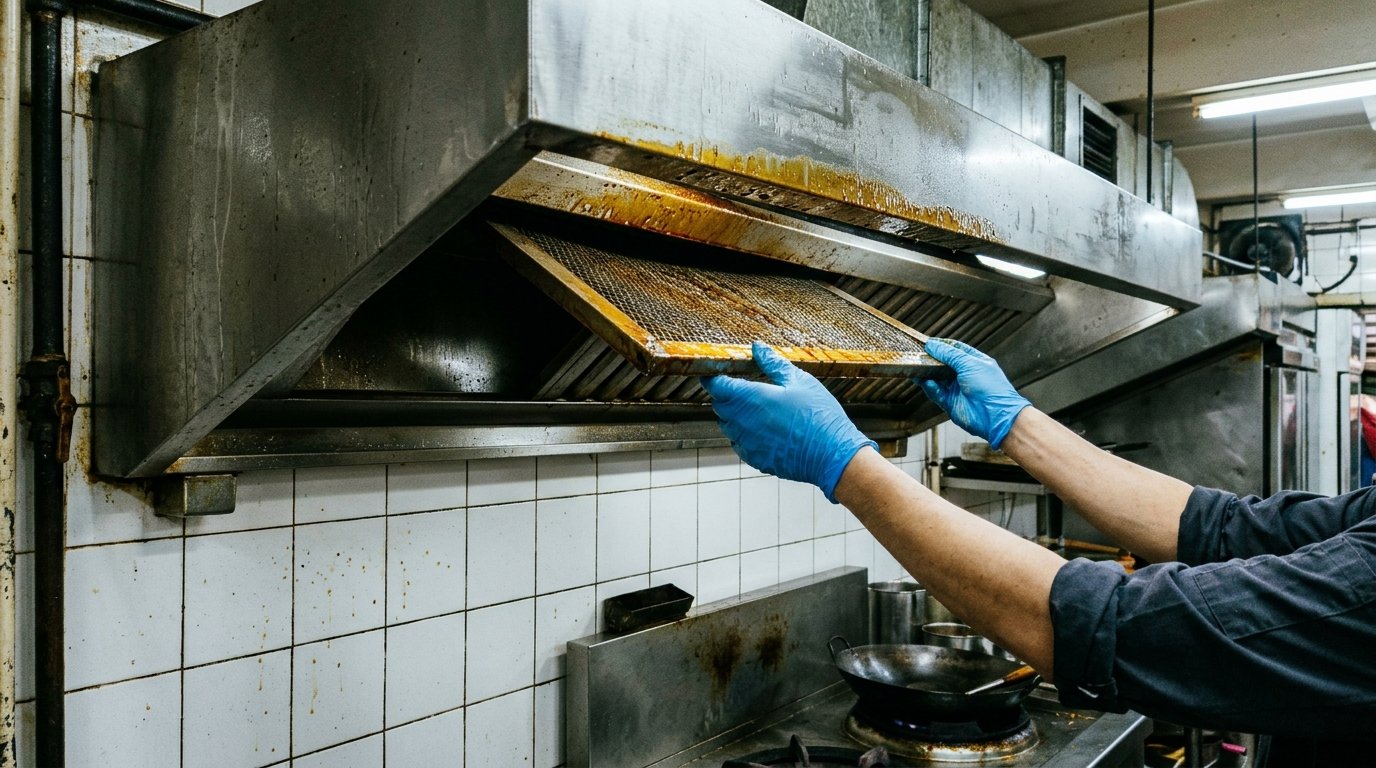
Direct answer: the grease packed into your exhaust hood filters and the ducting above them is the most flammable material in the whole kitchen, and a wok flare-up is the ignition source sitting directly underneath it. The fix is not complicated: soak the filters weekly, keep the hood underside and drip channel wiped, and have the duct interior degreased by someone who can actually reach it every few months, depending on how much frying you do. Below is the routine we set up for small F&B tenants in the shoplot rows around Seri Kembangan, Balakong and Kajang, and the signs that tell you the duct is overdue.
Why the hood is the real fire risk
Grease vapour from a wok does not disappear up the duct. It cools and condenses on the first cold surface it meets: the filter, then the hood plenum, then the horizontal duct run through the ceiling void. Over months that becomes a thick, tacky layer that burns hot and fast once a flare-up reaches it. The dangerous part is where the fire goes next — up the duct, through the ceiling space of a shoplot where nobody can see it, towards the roof fan. Kitchen staff usually only notice when smoke appears from the ceiling tiles, by which time the fire is already above them.
In the older shoplots around this area the duct often runs through a shared ceiling void or the floor of the unit above, so the tenant next door or upstairs is in it with you.
A weekly filter routine staff will actually follow
- At closing on a fixed day, pull every baffle filter out of the hood. Baffles slide out from below; if yours are the flat aluminium mesh type, they clog and sag within a year of wok cooking and are worth replacing with baffles.
- Soak them overnight in a plastic tub of hot water and kitchen degreaser. Overnight soaking is what makes this a five-minute job instead of a thirty-minute scrubbing job nobody does twice.
- Next morning, rinse with the hose, let them dry fully, and slide them back in. A wet filter dripping into the wok is a hazard of its own.
- While the filters are out, wipe the hood underside and empty the grease cup or drip channel along the front edge.
- Put one name and one day on a card by the hood. Rotating “whoever is free” is how it stops happening.
| Kitchen volume | Filter soak | Duct interior degreasing |
|---|---|---|
| Light cooking, toast, drinks, some frying | Every 2 weeks | Yearly |
| Full wok line, 50–100 plates a day | Weekly | Every 3–6 months |
| Heavy frying, charcoal, 100+ plates a day | Twice a week | Every 3 months |
Why scrubbing from below is not enough
Standing on a stool with a scraper only reaches the first metre of duct. Grease settles where the duct runs flat and at every bend, which is usually above the ceiling and nowhere near the hood. If your duct has no access panels, you cannot clean it and neither can anyone else. Fitting hinged access panels at the bends and along the horizontal run is a one-off handyman job and the first thing we do on a hood that has never been properly serviced. After that, the duct interior can be scraped and degreased section by section instead of guessed at. Long multi-storey duct runs to a roof fan are specialist work, and we will say so rather than pretend.
The signs you have waited too long
- Dripping. Brown grease dripping from the hood edge onto the wok station or prep bench. Apart from being a hygiene inspection problem, it means the hood plenum above the filters is saturated.
- Airflow loss. The kitchen is hotter than it used to be, smoke rolls out into the dining area, and staff complain about the heat. Caked filters and a fan impeller coated in grease can cut airflow dramatically; cleaning them often brings it back without buying anything.
- Fan motor strain. A blocked system makes the roof fan work harder, and motors burn out. Any replacement wiring, isolator or motor connection is carried out with our licensed partner contractor, Suruhanjaya Tenaga compliant, within the usual RM 80–600 electrical range.
- Smell outside. A rancid smell in the back lane under the exhaust outlet means grease is being carried all the way through, not caught at the filter.
Bundle it with the drains
The hood, the grease trap and the floor drains are the same problem in three places: grease that nobody wants to handle. Doing them in one maintenance visit is cheaper and far more likely to actually happen than three separate calls. A monthly or quarterly visit covering filters, hood, accessible duct sections, grease trap and floor drains is exactly what our business maintenance service is built around. Larger kitchens with a fire suppression system above the hood should also have that serviced by the system’s own contractor — it is not something we touch.
Honest closing note: for a small kedai with one wok, the weekly soak and a yearly duct clean is enough, and most of it costs nothing but staff time. Call someone in for the parts you cannot reach, not for the parts you can.
Facing this problem at your home or shop?
WhatsApp us a photo — honest answer within 1 working hour. Serving Serdang, Seri Kembangan, Kajang & Puchong.
WhatsApp 013-940 0355