Guides ·
Wet kitchen floor seeping into the next room? Waterproofing is not just for bathrooms
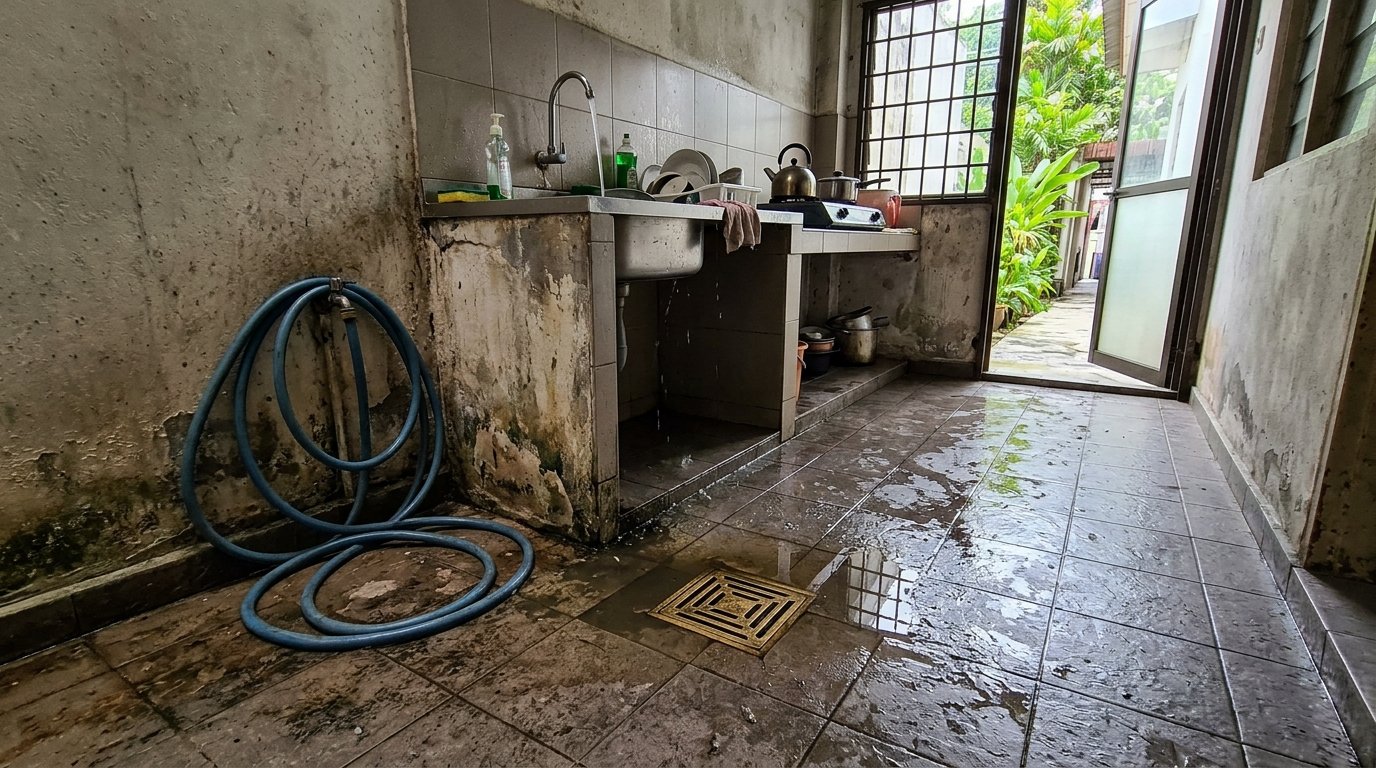
Straight answer: if the skirting paint in your dining room keeps blistering along the wall it shares with the wet kitchen, or the base of your kitchen cabinets smells musty no matter how often you clean, the water is almost certainly travelling sideways under the tiles — and the usual reason is that the wet kitchen floor was never waterproofed in the first place. Malaysian wet kitchens get hosed down like bathrooms, but in most houses they were built like dry rooms: tile, screed, concrete, and nothing in between to stop water.
We see this constantly in terrace houses around Serdang, Seri Kembangan, Balakong and Kajang, especially where the wet kitchen is a back extension added years after the house was built. The original bathroom got a membrane because it had to pass a ponding test before tiling. The extension floor usually got screed and tiles on the same day, and that was that.
Why a wet kitchen leaks sideways, not down
A ground-floor wet kitchen has no ceiling below it to stain, so the leak announces itself differently. Washing water that gets past the grout soaks into the screed — the sandy cement layer under the tiles — and screed carries water sideways surprisingly well. It travels until it meets the next room’s wall base, then wicks up into the plaster and pushes the paint off from behind. That is why the damage shows up a room away from where the water actually enters, and why repainting the dining room skirting every Raya fixes nothing.
The signs, from mild to serious
- Grout lines that stay dark for hours after the floor has been washed — the screed below is saturated and feeding moisture back up.
- A musty smell inside or under the kitchen base cabinets that returns a day after cleaning.
- Paint blistering or flaking at the skirting of the next room, along the shared wall.
- A white powdery crust (efflorescence) at the base of walls — minerals carried out of the wet screed.
- Tiles near the floor trap starting to sound hollow when tapped — long-term saturation breaking the bond.
Two things only a site visit reveals
First, the gradient. A wet kitchen floor is supposed to fall towards its floor trap so washing water drains in seconds. Many were laid flat, or worse, with the trap at the high end — so every wash leaves ponding water sitting on the grout lines, and grout is not waterproof. Second, if the wet kitchen is an extension, there is a joint where the new slab meets the original house slab. The two slabs settle at slightly different rates, that joint hairline-cracks, and it sits exactly where the water wants to cross into the house. Any fix that ignores that joint fails within a year.
Honest options and what they cost
| Option | What it solves | Rough cost |
|---|---|---|
| Change habits: squeegee instead of hosing, dry the floor after washing | Mild cases, buys time | Free |
| Rake out and re-grout, then seal | Water entering through failed grout only | Low hundreds RM |
| Hack tiles, lay proper membrane, re-tile with correct fall | The actual problem, permanently | RM 1,500–5,000 |
We will say this plainly: if the screed is already saturated and the next room is showing damage, re-grouting alone is lipstick. The grout will look new while water keeps using the slab joint and the trap surround. The proper fix is the same as a bathroom re-waterproofing job — hack up, membrane turned up the walls, ponding test for 24 to 48 hours before a single tile goes back down, then re-tile with a genuine fall to the trap. That ponding test is the part a cheap quote quietly skips, and it is the only proof the membrane actually holds water.
What you can check yourself this weekend
- Wash the floor as usual, then watch where the water goes. If it ponds instead of reaching the trap, note where.
- Four hours later, feel the grout lines. Still dark and damp? The screed is holding water.
- Check the skirting in the adjoining room with your palm — cool and slightly damp plaster confirms sideways travel.
If two of those three show up, it is worth a proper inspection before the cabinets and the neighbouring wall take more damage. You can see how we handle this under re-waterproofing, and where the job sits in our price guide.
Facing this problem at your home or shop?
WhatsApp us a photo — honest answer within 1 working hour. Serving Serdang, Seri Kembangan, Kajang & Puchong.
WhatsApp 013-940 0355